
>> TUTORIAL // DARK FRENCH ELECTRO
Justice, Gesaffelstein, The Hacker, Vitalic: dark French electro is distorted, cold and direct. But it does not start with a preset.
Here is how I approach this style, from the notes to the structure, in 7 steps.
- 07steps
- 04references
What dark French electro is
When people talk about French electro, they often think of the funky, filtered side of the French touch. There is another side: darker, colder, more aggressive. Justice, Gesaffelstein, The Hacker and Vitalic each have their own sound, but they share a few things.
- Distortion: basses and synths pushed until they crack, used for color as much as for power.
- Simple machines: The Hacker and Gesaffelstein often talk about limited setups. The limits push you to find ideas.
- Roots outside the club: EBM, new wave, post-punk and Kraftwerk are as present as house or techno.
- Not much of the EDM formula: Gesaffelstein has said he avoids the usual build-up, drop and same drums.
Most tutorials online explain how to recreate one sound from one track. Here I want to talk about the method I use for this style.
Notes first
The emotion of a track comes first from the notes: the key, the intervals, the scale. The sound comes after, as a second layer on top.
There is no scale trick. Each scale has its own personality, so you have to test a lot. Try to get out of major and minor only: modes like Phrygian or Lydian bring other colors, and some of them have a darker identity that fits this style well.
A great sound will not save a weak melody. Write the notes first.
Distort the top of the bass
For me, distortion is what gives the French electro color. It changes the emotion of a sound, but it also has a technical role.
- Volume and density: a distorted bass is loud, present and dense.
- Like a compressor: distortion reduces the dynamics. The bass stays loud and present all the time.
- Only the top of the bass: I distort the upper part of the bass spectrum, not the sub or the low mids. Distorted, they quickly turn muddy and imprecise.
Distortion is there to excite the top of the bass. The low end stays clean.
Groove comes from the sounds
The basic pattern is simple: a kick on every beat, a clap on 2 and 4, a hat on the off-beat, open or closed. A little swing helps: place the hat slightly late, at the back of the beat.
But most of the groove comes from the sounds themselves, from the way each one develops over time:
- The clap: its length, and its position. Slightly before or after the beat, the groove changes completely.
- The kick: how its tail develops, and whether its top works in several stages, an attack and then a body.
These small details are what give the drums their groove.
Dark and cold: dry against wet
The topic is wide, so here are two examples of what I do.
Dry against wet
I put very dry elements against very wet ones. A pad in a very wide reverb shows the depth, a wide 3D field. Then I bring in a mono, very dry element. The contrast is huge.
Long ambiences and drones work well for this background layer, like the ones in DARK AMBIENT Vol.1.
It gives the listener reference points: the wide sounds feel very wide, the precise sounds feel loud and right in front. That contrast and that surprise feel brutal, and that is what makes the track dark and cold.
Slightly unstable synths
I also like synths that are a little out of tune, a little unstable. They recall the identity of old analog synths. The Hacker says he prefers analog gear for this reason: it sounds dirtier and more real.
Structure and tension
I use few build-ups. They belong to electronic dance music, and you hear them much less in EBM and in this style. It depends on the context.
Tension can be good, but it does not have to come from the rhythm. A synth that evolves, a harmony that changes, can do the job.
My structure is quite free, but I always start with an intro that brings the elements in little by little. Then a progression, and a break that leads to the climax, the drop. I like this pattern, which dubstep made popular.
To plan it, I use the Structure and Drop Structure tracks of my free TTT_Ableton Template, the project I start every track with.
I also like to break the cycle: I add one or two extra bars here and there to surprise the listener, before going back to a full cycle. In the end, anything is possible.
Composition before sound design
There are many artists and influences in this style. Start by listening a lot to see what already exists.
Then ask yourself a few questions: does this style really speak to you? Do you have something to bring to it? Do you feel something when you produce it?
The most common mistake I hear is leaving composition aside and focusing on sound design. The tracks sound good and are well produced, but something is missing musically.
In short
Notes first, then distortion on the top of the bass, a simple pattern with sounds that move, contrast between dry and wet, and a structure that surprises. The rest is up to you and to what you want to say.
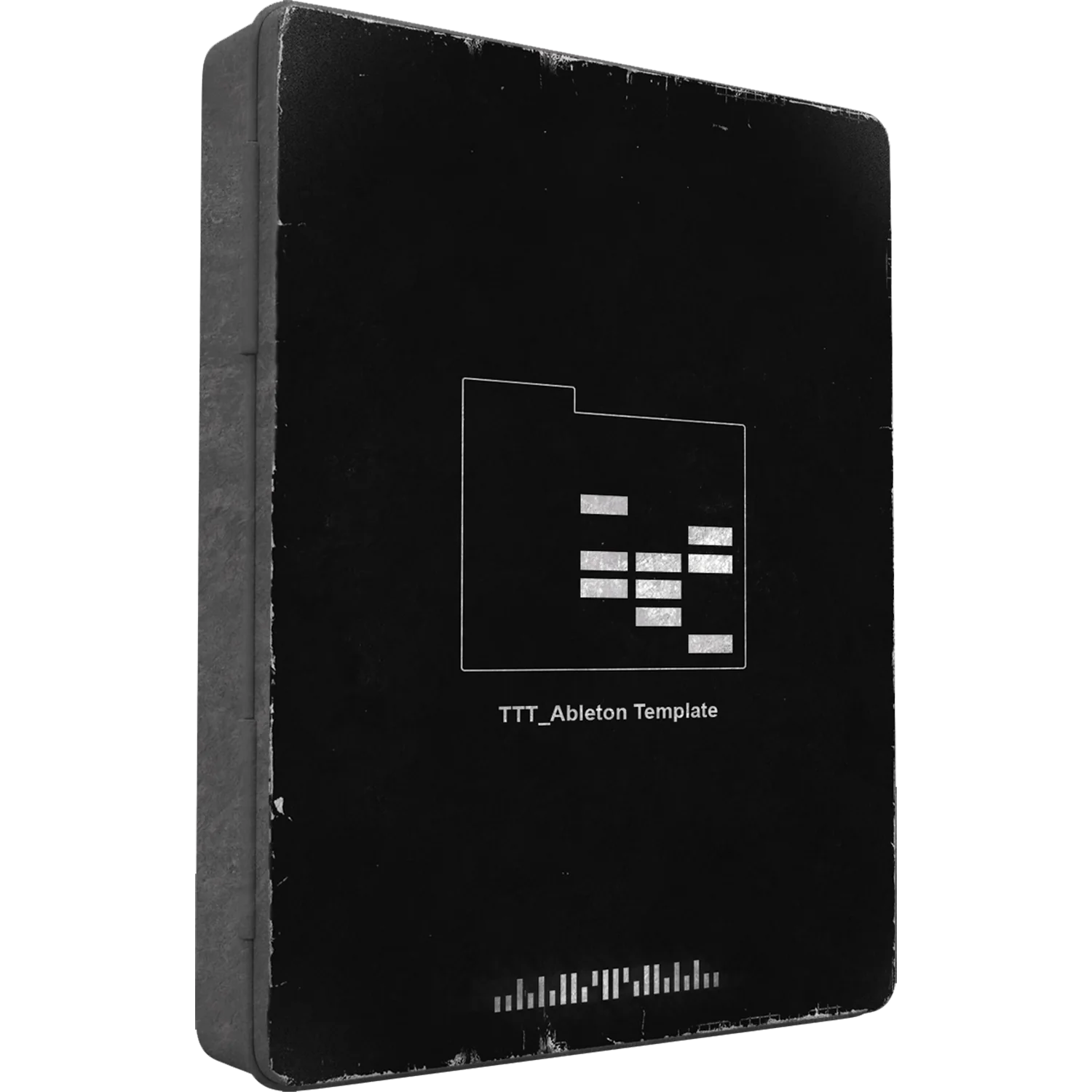
>> FREE // ABLETON LIVE TEMPLATE
TTT_Ableton Template
A free Ableton Live project to open, take apart and use as a starting point. For distorted basses and dark textures, check out Core Vol.1 and FACTORY Vol.1.
Enjoy it. — TTT
Leave a Reply